
Place Notes: 1944
The long shadow

I’m writing this on June 6, 2025, and all you World War II buffs out there know the significance of the date in the year that is the title of this reflection. Any 18 year-old private in the US Army who went ashore in Normandy that day and survived would be 99 years old. The world-wide cataclysm that changed everything is fading fast from living memory. It won’t be much longer before witnessed images of it exist only in books, documents, photos and footage.
I’ve always been a history buff, partly, I think, because one of my earliest (and very vague) memories of watching TV was a documentary series from the mid-60s, probably to commemorate the 20th anniversary of the war’s end. But the first hint that the phase we’re in now was coming-on slapped me in the face in the mid-1980s. I was substitute teaching at a junior high in south central LA, standing-in for a history teacher. Taking roll for a very mall bunch of restless boys - I recall no girls in this group of maybe a dozen - I sensed rough sledding unless I did something to engage quickly. Though no one was bouncing off the walls yet, I clearly had to do more than robotically carry out the basic assignment. Of course, genuine conversation is always worth a try, so I talked about the subject. Did anyone have a relative who might remember World War II and tell them about it?
They thought about that, and the eventual answer was unanimous: no. I was astonished, because that was so very far from my own experience. I was 25 or 26 and they were all 13-ish. It’s likely, I think, that they had simply never had occasion to ask anyone about that time a couple generations back, though there were some Hispanic kids whose grandparents might not have lived in the US then.
Of course the war will never truly fade in significance because its effects were so profound. Many aspects of it remain controversial even 80 years after the fact. Both of my parents remembered it vividly; my mom recounted the ‘Battle of LA’ to me more than once. She remembered being 14, afraid in the dark as searchlights scanned the night sky, and later saw shrapnel from anti-aircraft shells laying around the neighborhood. Movie buffs may recall that the ‘battle’, which seems to have erupted from a severe case of jitters among anxious air-raid wardens, was hilariously satirized by Steven Spielberg in “1941”.
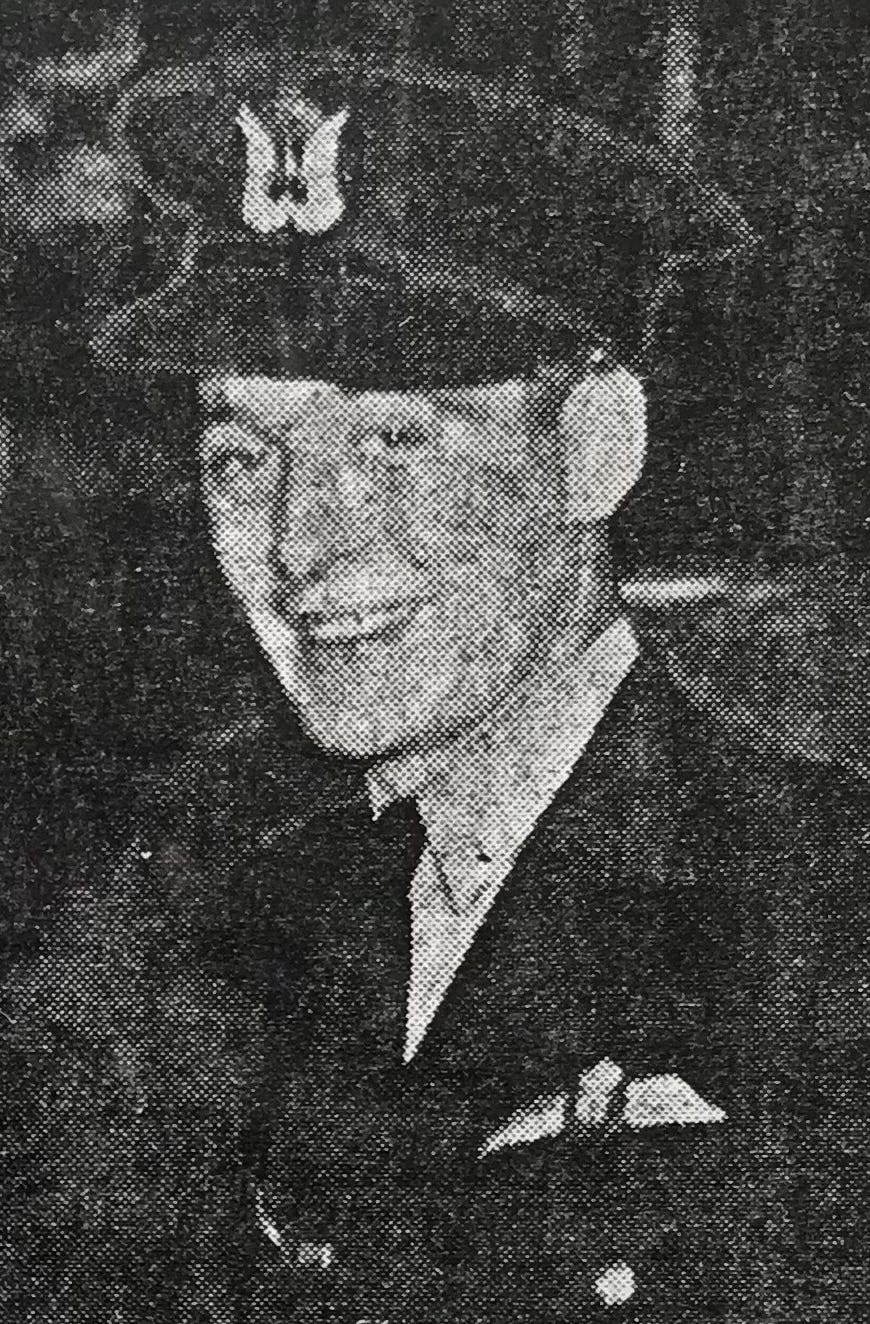
For my dad the war struck much closer to the bone. As a freshly minted MD with asthma he was rejected for service despite multiple attempts to enlist both in Canada and the US. But his younger brother Lorne got into the RCAF (Royal Canadian Air Force) and trained as a pilot. Lorne was a well-loved standout in a family of 7 siblings, a talented musician who had been enrolled as an undergrad at McGill University - where my dad was studying medicine at the time - when the war broke out in 1939. Three years later he’d learned to fly and was assigned to a flight school in Ontario as an instructor, a sergeant pilot. He was anticipating a combat assignment in the UK when he was killed in a training accident on June 25, 1942, the day before my dad’s 35th birthday. Lorne had been married a year, dying two days before his first anniversary. His wife Alona was apparently being treated for TB at a sanitarium near the crash site. Family lore had it that he may have been showing off to her when he crashed, though that is impossible to confirm.
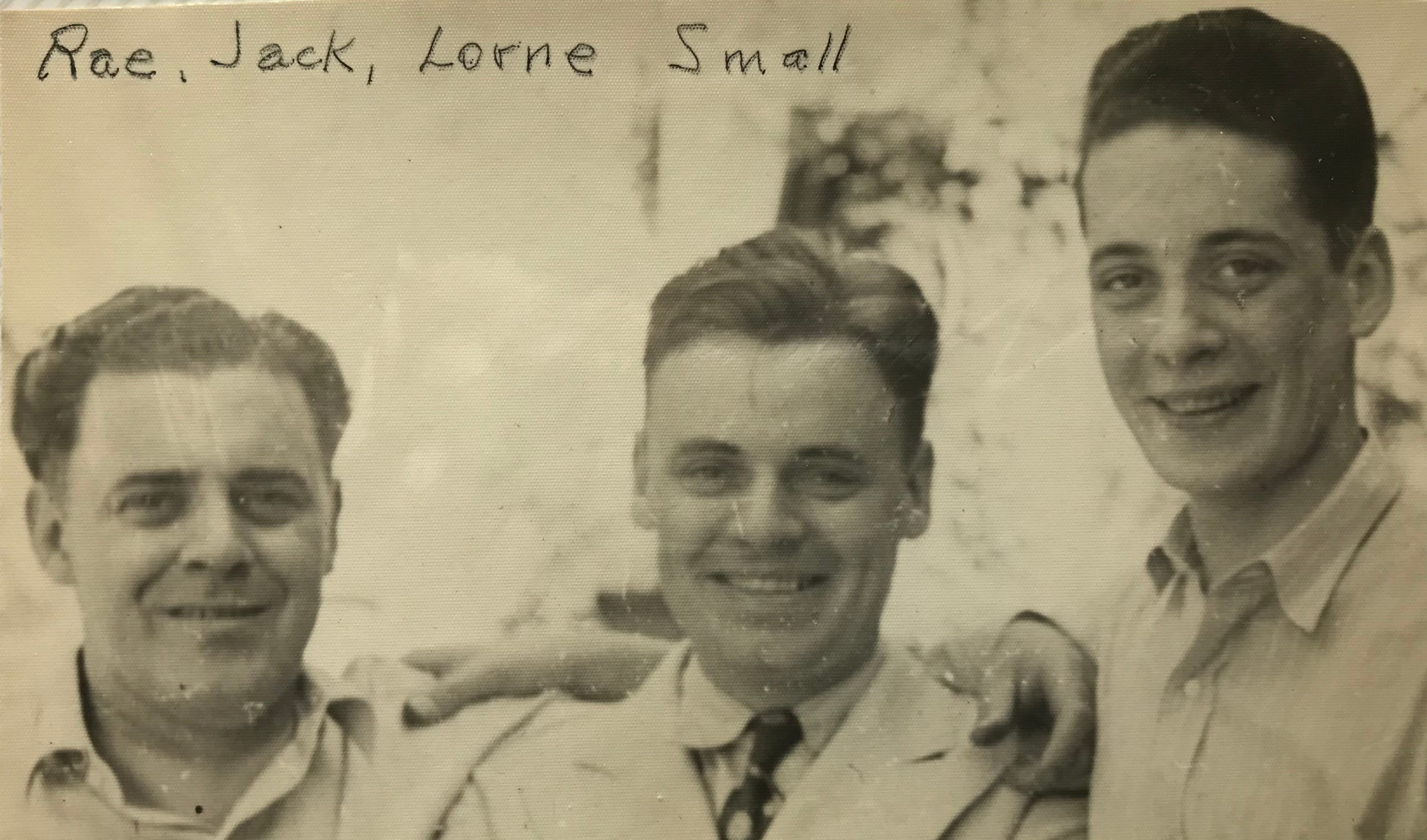
Lorne with his two oldest brothers, Rae and my dad, Rockford, Illinois, June 1944.
The grotesque sadness of a loss like that must be impossible to fathom for anyone who hasn’t experienced it first-hand. Also impossible to measure is the tragic waste of so much human potential. We can never know what Lorne Small or the other hundreds of thousands of Allied soldiers who died could have done - for well or ill - had they been spared. They’d almost all be gone by now anyway, but with no way to measure the true weight of their absence we can only guess at what we’ve been missing ever since. That void can only ever be filled symbolically with tokens of remembrance, and typically very humble ones at that. When it came to recalling combat, many of their surviving friends were rendered mute by it, struggling to cope with luridly terrifying visions for the rest of their lives. There’s a term for that now, but calling it ‘PTSD’ is at best a nodding acknowledgement of the impact of violence on the minds of those who witnessed it.
In response we can resolve to respect the permanence of war’s shadow. Yes, the need for national self-defense exists, and unilateral pacifism is an open invitation to aggression. The well-worn arguments for the maintenance of military defense are as irrefutable as they are depressing. But Americans must also balance such fears with acknowledgement that, despite the bracing effect of the national ideals that were rallied-around to honorable effect in the wake of Pearl Harbor, our postwar leadership class has since then leaned-on our soldiers to carry-out questionable policies more than once. The Iraq War is all the example most of us need to be reminded of that.
Americans didn’t have to question the purpose of the war they were fighting in 1944. But by D-Day they had also only just begun to pay its human cost. Casualties mounted immediately and stayed high through V-E Day eleven months later; before the Normandy landings ground combat had been vicious in Africa, Sicily, and Italy but smaller in scale. Fighting in the Pacific was also intense but relatively small numbers were engaged; the bloody struggle for Okinawa in the spring of 1945 was one of the Pacific theatre’s first battles to approach European levels of mass combat. The dramatic increase in soldiers KIA (killed in action) after D-Day is a factor that undoubtedly influenced the pursuit of the war into its final days, though I have never seen it cited - by either side - in the ongoing debate over whether the bombings of Hiroshima and Nagasaki were justified.
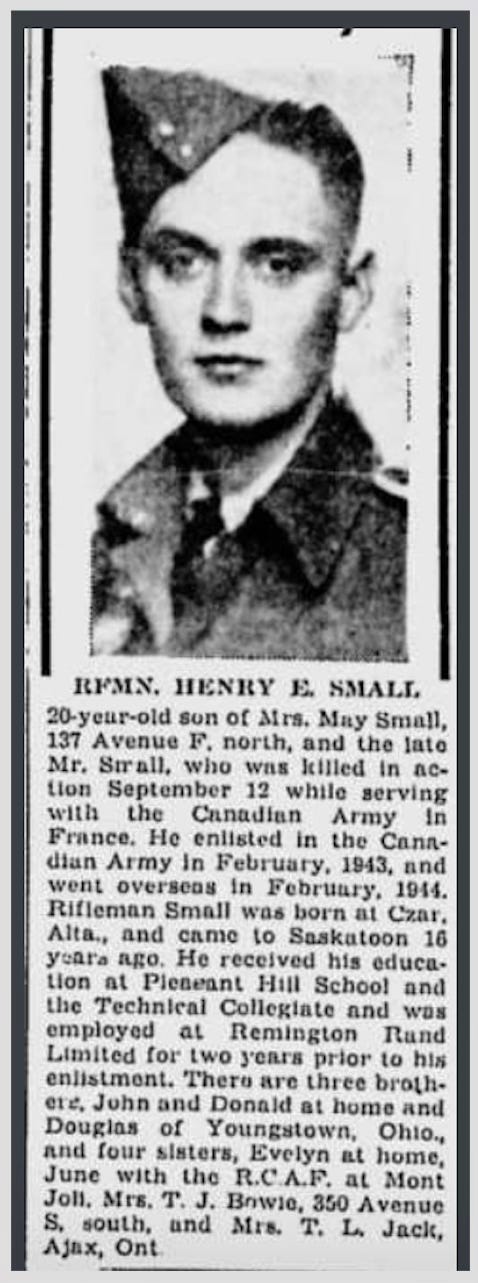
A few years ago, while messing around on Ancestry.com, I stumbled across a brief write-up about a distant relative, Henry Small, a Canadian infantryman who died in action in Normandy in September, 1944. His line had split-off from my Dad’s decades before, heading west across the plains to Alberta from the original Small-family landing-spot on a farm near Mount Forest, Ontario. (They’d set-up shop there after emigrating from England in the 1850s.) As far as I know, the two families were no longer in close contact. But the dated image caught my eye with its arresting proof of the power of DNA. He looks like he could’ve easily been Lorne Small’s brother. Like Lorne he came from a big family. The son of a widowed mother, Henry is forgotten now much like Lorne, the last of whose siblings died over 20 years ago. All that’s left of him is his image and those of us who share something of it.
Very poignant post, Tim, and sadly, I haven't come across much else about WWII or D-Day lately, at least on Substack. The memory of the war really has all but faded.